
Clinically reviewed by Erik Lee, PMHNP-BC, ADHD-CCSP · Published September 26, 2025 · Last reviewed September 4, 2026
If you’re seeking medication management in Oregon, you should know the warning signs of serotonin syndrome—so you can act fast and avoid a true emergency. Celium provides psychiatric care in person in Portland and by telehealth statewide.
What it is (plain English)
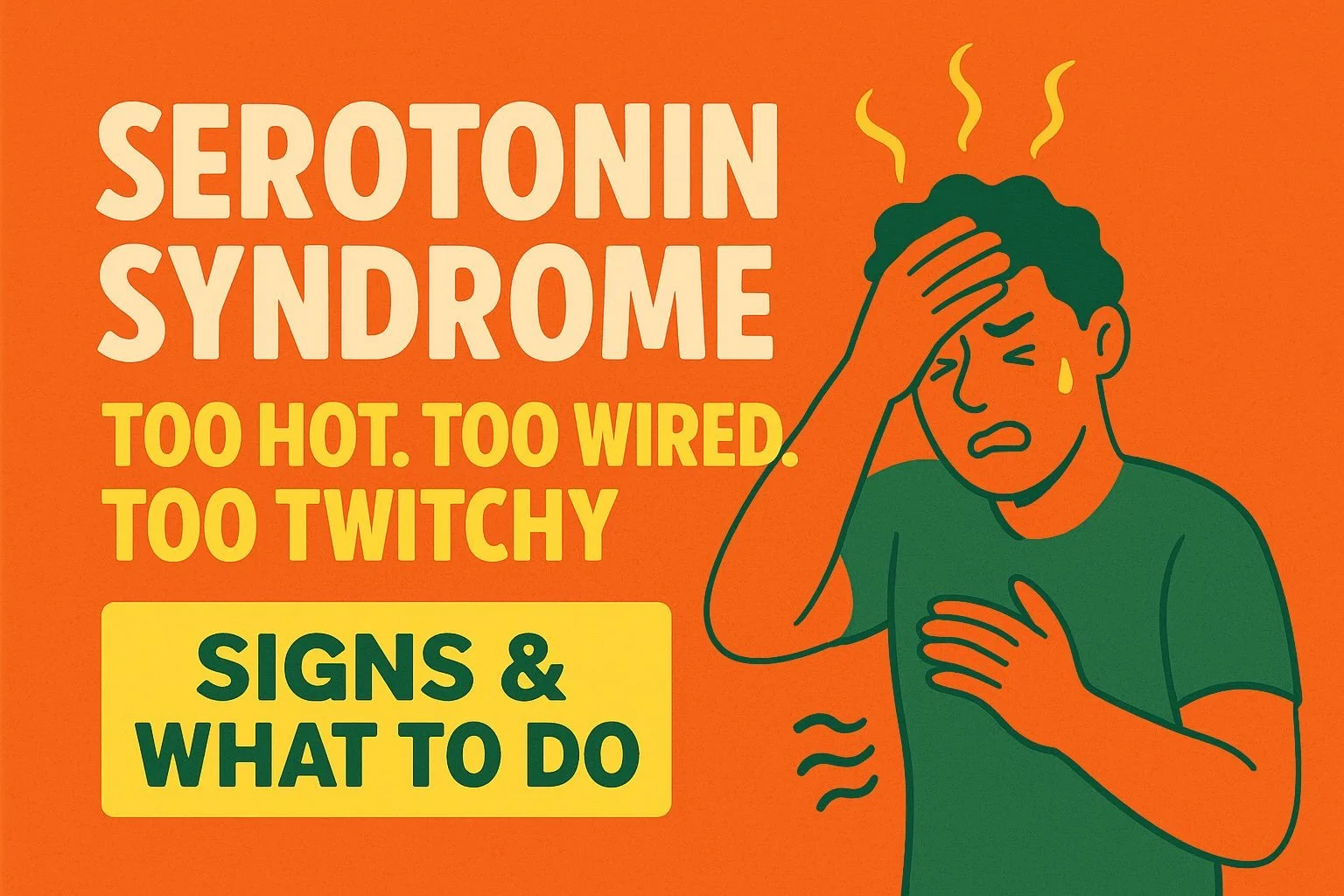
Certain meds, supplements, or drugs can push serotonin too high, sending your nervous system into overdrive. Symptoms often start within hours of starting/increasing a med or mixing two serotonin-raising substances.
Think: too hot, too wired, too twitchy.
What to watch for
Early or mild — call your prescriber same day
Restless, amped up, can’t sit still
Shaking or twitchy/jerky muscles (leg bouncing, jaw tremor)
Sweating, warm skin, big pupils
Fast heartbeat, higher blood pressure, headache
Nausea or diarrhea
Red flags — ER now / call 911
Fever ≥ 101.5°F (38.6°C) or drenching sweat
Muscle rigidity or repetitive jerks/twitches (clonus) you can’t control
Confusion, agitation, hallucinations, severe anxiety, or not making sense
Very fast heart rate, fainting, or seizures
When it happens
Usually hours to 24 hours after a dose increase, adding a new med, or mixing serotonergic substances.
Risk rises when prescriptions meet OTCs, supplements, or recreational drugs.
Common culprits (examples—not a full list)
Antidepressants: SSRIs/SNRIs (sertraline, fluoxetine, escitalopram, venlafaxine)
MAOIs: phenelzine, tranylcypromine, selegiline; linezolid; methylene blue
Pain/migraine/psych: tramadol, meperidine, fentanyl; triptans; lithium
OTC/herbals: dextromethorphan, St. John’s wort, ginseng
Recreational: MDMA (ecstasy/molly), cocaine—especially on top of antidepressants
Psychedelic + MAOI combos: e.g., ayahuasca (harmala MAOIs) with SSRIs/SNRIs
What to do
Mild symptoms: Contact your prescriber or urgent care the same day, before your next dose.
Red flags: Call 911 / go to the ER. Say “possible serotonin syndrome.” Bring a list/photo of all meds, supplements, and substances.
Do not restart the suspected med(s) until cleared by your clinician.
Prevention = smarter medication management
Don’t mix serotonergic meds without checking first.
Tell every clinician/pharmacist about all prescriptions, OTCs, and supplements.
MAOI washouts: usually 14 days; 5 weeks after fluoxetine before starting an MAOI.
Be cautious after dose increases or when adding tramadol, linezolid, dextromethorphan, or MDMA.
We provide diagnostic evaluations, medication management, and MOUD/MAT via telehealth across Oregon.
How to get help now (medication management in Oregon: Celium Healthcare)
Self-schedule your intake (telehealth available statewide).
Check rates & in-network insurance (Regence, Moda, Samaritan, Adventist PPO). Current list: https://celiumhealthcare.com/rates-and-insurance
Crisis? If symptoms are severe or escalating, call 911 or go to the nearest ER. Do not wait.
Common Questions
Q: What is serotonin syndrome in plain English?
A: Excess serotonin activity can push the body into overdrive, often within hours of starting or increasing a med or mixing serotonin-raising substances.
Q: What are mild vs emergency signs?
A: Early or mild signs mean call your prescriber the same day. Red flags mean ER now — call 911. Do not wait.
Q: How does prevention relate to medication management in Oregon?
A: Prevention is smarter medication management, with Celium’s in-person and telehealth care across Oregon. Schedule: https://celiumhealthcare.com/schedule-psychiatric-visit-oregon